

How Many Impressions Do Car Topper Ads Really Get? Data & Examples
Most business owners underestimate just how visible their vehicle signage truly is. In fact, a single car topper can generate more impressions in one day than a typical local print ad delivers in a month. Understanding the real exposure numbers is essential for anyone weighing the benefits of car topper advertising against other options. This article breaks down real-world data, traffic patterns, and practical examples so you can make informed decisions about moving billboards’ value.
Whether you run a franchise location or an independent shop, the right signage on your vehicle turns every mile into advertising. Below, you’ll find honest estimates, city and suburb comparisons, and tips for getting the most from your investment in car toppers and other vehicle graphics.
Why Vehicle Signage Outperforms Digital Ads for Local Businesses
The benefits of car topper advertising often surprise those used to digital campaigns. A well-placed sign on a delivery car, service van, or rideshare vehicle can rack up 30,000 to 70,000 views per week in a mid-sized city, according to traffic engineering studies and HTH Car Signs’ own customer data. Unlike pay-per-click or social media ads, every passerby in traffic, parking lots, and neighborhoods sees your brand—without ongoing costs or click fraud risk.
For example, a Jimmy John’s franchisee using car toppers in a busy metro area may log 70–100 miles per day, passing through residential streets, business districts, and school zones. Each mile exposes the sign to hundreds of potential customers, especially during high-traffic times when vehicles are stopped at lights or moving slowly. These repeated local impressions build recognition and trust in ways online ads rarely achieve.
Real-World Exposure: Urban vs. Suburban Mileage
How many impressions does a car topper really generate? The answer hinges on where and how the vehicle operates. In urban areas, delivery drivers and service vehicles often travel shorter distances but encounter heavier traffic, resulting in more eyes per mile. Suburban routes may cover more ground but with fewer vehicles per block. Here’s a breakdown based on HTH’s decades of fleet tracking:
A typical city-based delivery car drives 60–80 miles daily, frequently through dense corridors, yielding 8,000–12,000 impressions per day.
Suburban vehicles might cover 100+ miles, with traffic volume dropping outside major intersections, averaging 4,000–7,000 daily views.
Special events—like local festivals or sports games—increase exposure dramatically, sometimes doubling average impressions in a single day.
HTH Car Signs’ patented designs, visible from multiple angles and built to withstand varied U.S. weather—from summer heat to winter road salt—ensure your message remains clear regardless of route or climate.
Comparing Car Toppers, Door Magnets, and Vinyl Graphics
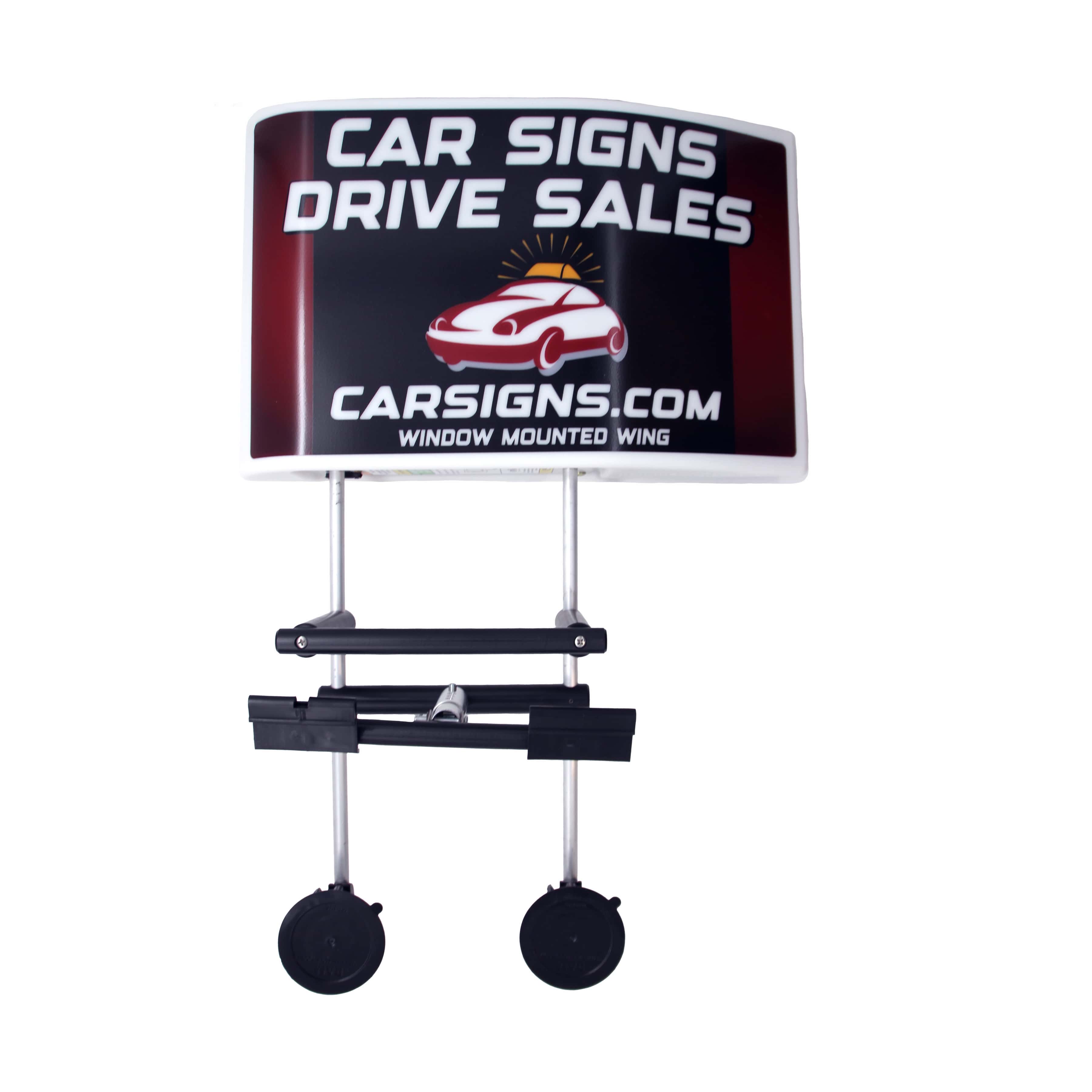
Not all vehicle signage delivers the same results. Car toppers offer height and illumination, capturing attention above traffic and in dim conditions. Door magnets and easy stick vinyl are ideal for branding on-the-go, especially for businesses that rotate vehicles or operate in HOA-restricted neighborhoods. Each method carries distinct benefits of car topper advertising, but toppers consistently outperform for pure visibility—especially in crowded city environments.
For franchise partners like Pizza Hut and Hungry Howie’s, maintaining brand consistency across hundreds of vehicles is crucial. HTH’s in-house manufacturing allows for rapid, uniform production—ensuring every sign matches corporate guidelines and lasts for years, not months.
Calculating True ROI: One-Time Cost, Lifetime Value
One of the most overlooked advantages of vehicle signage is its cost structure. Unlike digital ads that require monthly budgets and constant tweaking, a car topper is a one-time investment that pays off for years. Most HTH customers see their signs last through multiple vehicle cycles, with only minor maintenance. When you divide the initial cost by the hundreds of thousands of impressions generated each year, the cost per view drops to a fraction of a cent—far below any digital or print alternative.
For small businesses and large franchises alike, this means reallocating marketing dollars to signage can offer a measurable, long-term return. HTH’s ROI calculator helps estimate these savings based on your actual routes and vehicle usage.
Practical Tip: Track Your Impressions with Route Planning Tools
To maximize the benefits of car topper advertising, use a GPS-based route planner or Google Maps timeline to log your daily mileage and common routes. Combine this data with average traffic counts from your city’s transportation department to estimate daily and weekly impressions. Over time, you’ll identify high-exposure corridors and optimal service times—helping you schedule drivers and plan promotions for the greatest visibility.
In summary, car topper advertising delivers reliable, high-frequency impressions at a one-time cost—often outperforming digital and print campaigns for local reach. For a tailored estimate of your vehicle’s potential exposure, visit carsigns.com or call (800) 321-1850 for expert guidance and ROI calculations.


0 Comments
Leave a Comment