

Do Car Signs Affect Fuel Economy? Wind Resistance, Drag & Real Driving Impact
Car Signs: Fuel Economy Impact
The impact of carsigns on fuel economy is a topic of increasing interest among drivers and businesses alike. As vehicles become more integral to advertising, understanding how these signs affect fuel efficiency is crucial. This article delves into the aerodynamic principles that govern wind resistance and drag, exploring how car signs can influence fuel economy. Many drivers may not realize that even small changes in a vehicle's aerodynamics can lead to noticeable differences in fuel consumption. We will examine the mechanics of aerodynamic drag, the specific effects of car roof signs, and practical tips for minimizing fuel economy loss. Additionally, we will address common questions surrounding this topic, providing a comprehensive overview of how car signs interact with vehicle performance.
What Is Aerodynamic Drag and How Does It Influence Fuel Economy?
Aerodynamic drag is the resistance a vehicle encounters as it moves through the air, significantly influencing fuel economy. This resistance arises from various factors, including the shape of the vehicle, its speed, and the presence of external accessories like car signs. As a vehicle accelerates, the drag force increases, leading to higher fuel consumption. Understanding "aerodynamic drag" is essential for optimizing vehicle design and improving fuel efficiency.
How Does Wind Resistance Affect Vehicle Fuel Efficiency?
Wind resistance plays a critical role in determining a vehicle's fuel efficiency. As speed increases, the impact of wind resistance becomes more pronounced, leading to greater fuel consumption. For instance, at lower speeds, the effect of wind resistance is minimal, but as speeds rise past around 40-50 mph, the energy required to overcome this resistance increases significantly. This relationship highlights the importance of considering wind resistance when evaluating fuel economy.
What Is the Drag Coefficient and Why Does It Matter?
The drag coefficient is a dimensionless number that quantifies the drag or resistance of an object in a fluid environment, such as air. It is a crucial factor in vehicle design, as it directly affects fuel efficiency. A lower drag coefficient indicates a more aerodynamic shape, which can lead to reduced fuel consumption. Understanding the drag coefficient helps manufacturers design vehicles that minimize drag and enhance fuel economy.
Further research emphasizes the importance of assessing a vehicle's drag coefficient under real-world conditions for accurate fuel economy predictions.
Real-World Drag Coefficient for Accurate Fuel Economy
The ultimate goal for vehicle aerodynamicists is to develop vehicles that perform well on the road under real-world conditions. One of the most important metrics to evaluate vehicle performance is the drag coefficient. However, vehicle development today is performed mostly under controlled settings using wind tunnels and computational fluid dynamics (CFD) with artificially uniform upstream conditions, neglecting real-world effects due to road turbulence from wind and other vehicles. Thus, the drag coefficients computed with these methods might not be representative of the real performance of the car on the road. For this reason, it is important to assess the vehicle’s drag as seen in real-world environments. An effort in this direction is represented by using the wind-averaged drag.
Accurate fuel economy prediction via a realistic wind averaged drag coefficient, L Dalessio, 2017
How Do Car Roof Signs and Toppers Impact Vehicle Aerodynamics?
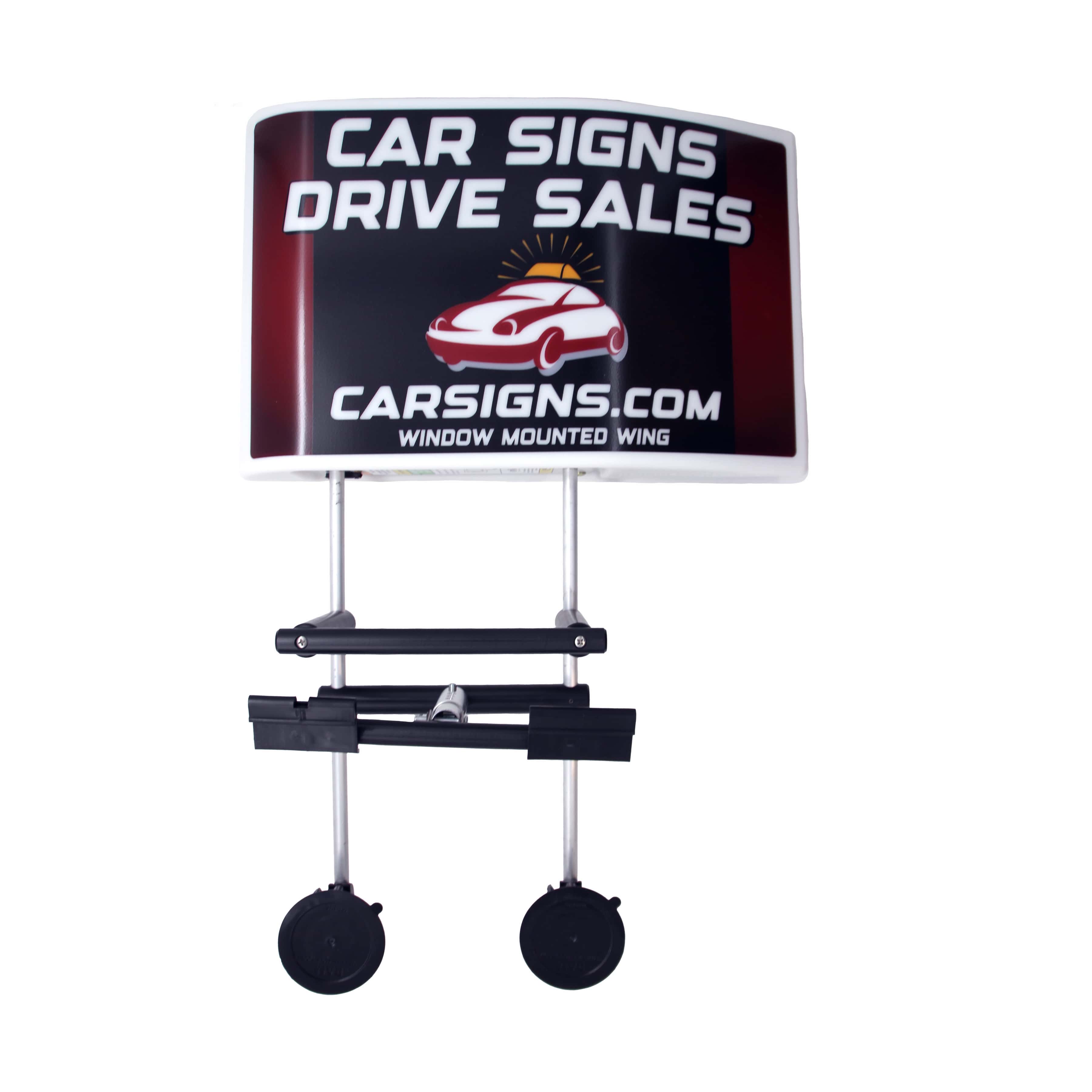
Car roof signs and toppers can significantly alter a vehicle's aerodynamics, increasing drag and potentially reducing fuel efficiency. These accessories disrupt the smooth airflow around the vehicle, leading to higher resistance and increased fuel consumption. It is essential to understand how different designs can impact aerodynamics to make informed choices about vehicle signage.
In What Ways Do Car Signs Increase Aerodynamic Drag?
Car signs increase aerodynamic drag by altering the airflow around the vehicle. The presence of a sign can create turbulence, which disrupts the laminar flow of air. This turbulence increases the drag force acting on the vehicle, leading to higher fuel consumption. Different types of car signs, such as large toppers or poorly designed graphics, can exacerbate this effect, making it crucial to consider design choices carefully.
What Are the Typical Drag Increases Caused by Different Car Sign Designs?
The drag increases caused by car sign designs can vary significantly. For example, a large, flat sign may increase drag by as much as 10-20%, while more streamlined designs may only add 3-7% to the overall drag. Understanding these differences can help drivers and businesses choose signage that minimizes fuel economy loss while still achieving their advertising goals.
Research further explores how specific roof sign placements affect drag.
Taxi Sign Aerodynamics: Roof Placement & Drag Impact
sign should be placed on the vehicle’s roof, this study investigates what the potential drag changes observed are when the sign or rearmost positions on the roof of the vehicle.
A drag reduction study on the aerodynamics of the Irish taxi sign, MG Connolly, 2023
What Is the Real-World Effect of Car Signs on Fuel Economy?
The real-world impact of car signs on fuel economy can be substantial, particularly for vehicles that frequently travel at higher speeds. Studies have shown that the presence of roof signs can lead to measurable decreases in miles per gallon (MPG), especially on highways where speeds are elevated.
How Much Fuel Economy Loss Is Caused by Car Roof Signs at Various Speeds?
Fuel economy loss due to car roof signs varies with speed. At lower speeds, the impact may be negligible, but as speed increases, the fuel economy can drop significantly. For instance, a vehicle traveling at 70 mph with a roof sign may experience a fuel economy reduction of around 5-10%, while at 55 mph, the loss might be closer to 2-5%. This data underscores the importance of considering speed when evaluating the impact of car signs on fuel efficiency.
What Do Recent Empirical Studies Reveal About Car Sign Drag and MPG Reduction?
Recent studies have provided valuable insights into the relationship between car signs and fuel economy. Research indicates that vehicles with roof signs can experience a reduction in MPG ranging from approximately 3-10%, depending on the design and speed. These findings highlight the need for drivers and businesses to be aware of the potential fuel economy implications of their signage choices.
How Can Aerodynamic Design Minimize Fuel Efficiency Loss from Car Signs?
Aerodynamic design plays a crucial role in minimizing fuel efficiency loss associated with car signs. By employing design principles that enhance airflow, it is possible to reduce drag and improve fuel economy.
What Are the Best Practices for Designing Aerodynamic Car Signs?
Best practices for designing aerodynamic car signs include using streamlined shapes, lightweight materials, and minimizing protrusions that disrupt airflow. Additionally, positioning signs lower on the vehicle can help reduce drag. Implementing these design strategies can lead to more efficient signage that does not compromise fuel economy.
Can Aerodynamic Car Signs Improve Mileage Compared to Traditional Designs?
Aerodynamic car signs can indeed improve mileage compared to traditional designs. By reducing drag, these signs allow vehicles to maintain better fuel efficiency, particularly at higher speeds. Studies suggest that well-designed aerodynamic signs can lead to fuel savings of up to around 5-10% compared to bulkier, less aerodynamic options.
What Practical Tips Help Reduce Fuel Economy Loss from Roof Accessories?
Drivers can take several practical steps to minimize fuel economy loss from roof accessories, including car signs. These strategies can help maintain optimal fuel efficiency while still utilizing necessary signage.
How Can Drivers Minimize Drag When Using Car Roof Signs?
- Choose Streamlined Designs: Opt for signs that are designed to reduce wind resistance.
- Position Signs Lower: Placing signs lower on the vehicle can help maintain smoother airflow.
- Remove Signs When Not in Use: Taking off roof signs when they are not needed can prevent unnecessary drag.
Are There Alternative Roof Attachments That Have Less Impact on Fuel Efficiency?
Yes, there are alternative roof attachments that can have less impact on fuel efficiency. For instance, magnetic signs or smaller, more aerodynamic decals can provide advertising space without significantly increasing drag. Exploring these options can help businesses maintain visibility while minimizing fuel economy loss.
Beyond car signs, various other vehicle add-ons have also been studied for their aerodynamic effects and impact on fuel consumption.
Vehicle Add-Ons: Aerodynamic Effects & Fuel Impact
In addition, the aerodynamic effects and impacts on fuel of some other add ons such as simplified roof-rack, skis, surfboard, ski box, upside down boat and bicycle have also been investigated.
Effects of vehicle add-ons on aerodynamic performance, F Alam, 2010
What Are Common Questions About Car Signs and Fuel Economy?
Understanding the common questions surrounding car signs and fuel economy can help clarify the impact of these accessories on vehicle performance.
Does a Car Roof Sign Significantly Reduce Fuel Economy?
Yes, a car roof sign can significantly reduce fuel economy, particularly at higher speeds. The increase in "aerodynamic drag" caused by the sign can lead to measurable decreases in MPG, making it essential for drivers to consider the implications of their signage choices.
How Much Drag Does a Typical Car Topper Add?
A typical car topper can add anywhere from 3-20% to the overall drag of a vehicle, depending on its size and design. This increase in drag can translate to a noticeable reduction in fuel efficiency, especially for vehicles that frequently travel at higher speeds.
Can Aerodynamic Car Signs Actually Improve Mileage?
Aerodynamic car signs can improve mileage compared to traditional designs by reducing drag. When designed with aerodynamics in mind, these signs can help vehicles maintain better fuel efficiency, particularly at highway speeds. This improvement underscores the importance of considering design when selecting car signage.


0 Comments
Leave a Comment