

Can You Use Car Signs on Electric Vehicles? Magnet Compatibility, Aluminum Panels & Alternatives
Car Signs for Electric Vehicles
Electric vehicles (EVs) often use non-ferromagnetic materials for body panels, so the simple question—can you use car signs on electric vehicles—has a practical short answer: usually not with traditional magnets. This article explains why magnets fail on many EV exteriors, how to test your vehicle for magnetism, and which paint-safe alternatives work best for temporary and long-term signage. You will learn the material science behind magnet compatibility, step-by-step magnet-testing methods you can perform at home without damaging clearcoat, and a comparison of vinyl decals, static cling, suction signs, gripper mats, and wraps. Practical guidance covers selection criteria, application techniques, and maintenance so you can protect EV paint while achieving the visibility you need. Read on for quick decision checklists, comparison tables, and actionable tips that help you choose the right sign solution for fleet branding, event promotion, or single-vehicle graphics.
Why magnets struggle on electric vehicle bodies
Most magnetic car signs require a ferromagnetic surface—typically steel—to hold the magnet backing in place. EV manufacturers increasingly use aluminum, carbon fiber, and composite panels to reduce weight and increase range, and these materials are non-ferromagnetic so standard 'EV car magnets' cannot attach. The result is common aluminum car magnet issues: magnets slide, shift, or fail to stick entirely, creating safety and visibility problems. Understanding which materials block magnetism and where steel may still appear on a vehicle helps you choose alternatives and decide where (if anywhere) a magnetic sign might work on an EV. The next subsection lists the typical EV materials that prevent magnets from sticking and how they behave with common sign backings.
Which EV body materials prevent magnets from sticking?
Aluminum panels are non-ferromagnetic, so they do not attract magnets despite being metal; many EV hoods, doors, and trunk lids use aluminum alloys for weight savings. Carbon fiber and fiberglass composite panels are lightweight and non-magnetic because their primary constituents are carbon or glass fibers in a resin matrix. Plastic trim and certain polymer panels are also non-magnetic and are common for bumpers or cladding. While some EVs retain steel in inner frame components or reinforcements, exterior painted surfaces are increasingly non-ferromagnetic—test specific panels to confirm magnetic compatibility. Understanding these material differences helps prioritize sign alternatives that adhere without magnets.
- Common non-magnetic EV materials include aluminum, carbon fiber, fiberglass, and polymer plastics.
- Steel remains magnetic but is more likely found in internal structures than on exposed outer panels.
- Paint systems and clearcoats can mask underlying materials, so testing surface magnetism is necessary before assuming compatibility.
This material overview leads directly to practical, paint-safe testing techniques you can use at home to verify where signage will hold.
How to test your EV’s surface for magnetism at home
A quick at-home magnet test uses a small household magnet and gentle technique to identify ferromagnetic areas without harming paint or clearcoat. Start by placing a soft, clean cloth over the magnet and lightly testing multiple locations—doors, hood, trunk, and rear quarter panels—using minimal pressure to avoid scuffs; if the magnet clings, the underlying substrate is likely steel. Repeat tests near seams and trim because some panels mix materials or have steel reinforcement. Beware of false negatives when testing over thick paint, trim, or undercoats; remove dirt and wax first and use a clean magnet to reduce slip. If magnet tests indicate non-magnetic panels, the next section outlines effective non-magnetic sign options and how they compare for durability, removability, and paint safety.
- Simple magnet tests prevent wasted purchases of magnetic signs for non-ferromagnetic panels.
- Use a cloth barrier and light touch to protect paint during testing.
- Test several spots because some areas may still accept magnets due to internal steel parts.
This testing method confirms whether to pursue magnetic solutions or switch to adhesive, suction, or micro-suction systems for reliable attachment.
Best non-magnetic sign options for EVs
When magnets won't stick, several paint-safe alternatives provide reliable attachment and varying permanence: adhesive vinyl decals, static cling stickers, suction cup signs for glass, gripper mats that create a friction- or micro-suction surface, and full or partial vinyl wraps for long-term branding. Each option trades off durability, cost, and removability, so selection depends on whether you need short-term promotion, seasonal branding, or permanent fleet identification.
The table below compares major sign types and attributes for EV applications.
| Sign Type | Adhesion Method | Vehicle Compatibility | Durability | Cost | Removability | Paint Safety |
|---|---|---|---|---|---|---|
| Magnetic sign | Magnetic backing | Steel panels only | Medium (if sticks) | Low | Easy | Low on non-steel (won't stick) |
| Vinyl decal | Pressure-sensitive adhesive | All painted surfaces | High (years outdoors) | Medium | Moderate (clean removal) | High when using paint-safe vinyl |
| Static cling | Electrostatic adhesion | Glass and smooth non-porous surfaces | Low-Medium | Low | Very easy | Very high (no adhesive) |
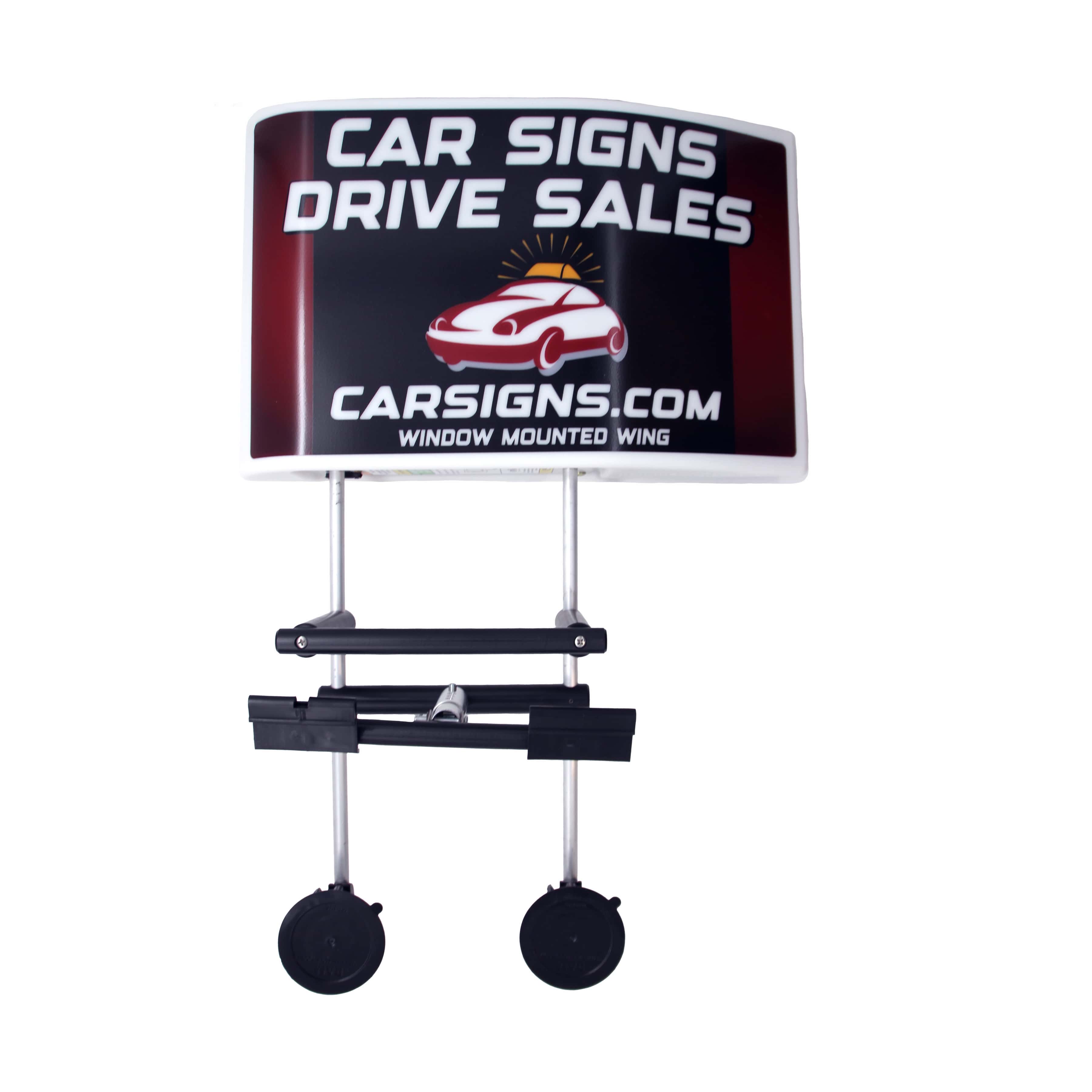
| Suction cup sign | Mechanical vacuum to glass | Windows only | Low | Low | Very easy | Very high (no paint contact) |
| Gripper mat (micro-suction) | Micro-suction or friction | Painted panels and composites | Medium | Medium-High | Easy with care | High if verified for clearcoat |
| Vinyl wrap (partial/full) | Adhesive film | Most exterior panels | Very high | High | Professional removal | High with professional prep |
This comparison highlights that adhesive vinyl and professional wraps offer the best combination of durability and paint safety for long-term EV branding, while static cling and suction options excel for temporary, glass-focused signage.
Vinyl decals and static cling have distinct installation needs and lifespans that inform best-use scenarios, which we cover in the subsections below.
Vinyl decals: durability, application, and paint-safe removal
Vinyl decals use a pressure-sensitive adhesive that bonds to a paint clearcoat; high-quality cast vinyl resists UV and conformability issues better than calendared alternatives. For best results, thoroughly clean the surface with a paint-safe cleaner, apply at moderate temperatures, and use a squeegee to remove bubbles and ensure full contact; heat can help conform complex curves, but avoid excessive heat that may affect adhesives. Removal should be gradual and done with low heat (hairdryer) and an adhesive-safe solvent if residue remains; avoid scraping that risks clearcoat damage. Professional installation is recommended for large or intricate decals to ensure edge sealing and longevity, while small die-cut vinyl pieces are practical for temporary promotions. Properly applied, vinyl decals balance durability and paint-safe removability, making them a top choice for many EV signage needs.
- Cast vinyl offers superior outdoor durability compared with calendared vinyl.
- Surface prep and correct application technique prevent bubbling and edge lift.
- Slow, heat-assisted removal minimizes risk to the paint and clearcoat.
These vinyl practices set the stage for considering non-adhesive options when adhesive application is undesirable.
Static cling and suction-based signs: uses, benefits, and limits
Static cling stickers and suction cup signs adhere without glue, making them ideal for glass or smooth interiors where residue-free attachment is crucial. Static cling relies on electrostatic attraction and works best on clean, dry glass; it's reusable and leaves no adhesive residue, which is perfect for rental or event vehicles. Suction cup signs attach mechanically to windows and are excellent for temporary rear-window advertising but perform poorly on curved or textured surfaces and can fail in extreme temperatures. Limitations include reduced wind resistance, shorter outdoor lifespans, and sensitivity to surface contamination, so they are best for short-term campaigns or internal displays. When glass or interior attachment is sufficient, these options provide a low-risk, paint-safe solution for EV signage.
- Static cling is reusable and residue-free but best for short-term use on glass.
- Suction signs work for windows but have temperature and suction limits.
- Both are excellent when adhesive contact with paint is to be avoided.
With glass-focused options covered, the next H2 explains gripper mats and other innovation-driven solutions that allow magnetic-style signage on non-magnetic panels.
Gripper mats and other adhesion innovations for EV signage
Gripper mats use micro-suction technology or high-friction surfaces to create a removable, non-adhesive interface between a sign and a non-magnetic panel, enabling magnetic signs to be used on aluminum or composite exteriors when direct magnetism is impossible. Micro-suction mats contain microscopic cavities that form vacuum-like seals on smooth paint; frictional gripper mats rely on textured surfaces and pressure to resist movement. Both approaches let you mount a magnetic sign onto the mat, combining the advantages of magnets (easy swap-out) with compatibility for non-ferrous panels. Verify manufacturer claims about UV resilience, temperature tolerance, and whether the product is safe for clearcoat; test a small hidden area to confirm no marking or chalking occurs.
How gripper mats enable magnetic signs on aluminum/non-magnetic surfaces
Gripper mats work by providing an intermediate layer: either micro-suction pockets that generate reversible vacuum-like adhesion or high-friction polymers that prevent lateral slippage. Installation typically involves cleaning the panel, placing the mat flat, and pressing to engage the surface; you then affix a magnetic sign to the mat rather than the vehicle itself. Limitations include edge lift over time, reduced hold in extreme dirt or moisture, and potential residue if the mat traps contaminants—so routine removal and surface cleaning are advised. For fleet use, periodic inspections are necessary to ensure mats remain secure and non-damaging; perform a small adhesion test before long-term deployment. Understanding these mechanics helps determine whether gripper mats are suitable for specific EV signage needs.
- Micro-suction mats provide reversible vacuum-like adhesion to smooth clearcoats.
- Frictional gripper mats prevent lateral slide but can lose grip in wet conditions.
- Regular cleaning and testing prevent paint marking and maintain adhesion.
Having covered mat-based options, the next subsection contrasts other practical long-term signage like window stickers and wraps.
Other practical options for EV signage: window stickers and wraps
Window stickers and partial or full vinyl wraps offer alternative paths for long-term visibility that don't rely on magnetic attachment to exterior panels. Window stickers are efficient for rear- or side-window messaging but must follow local laws regarding sightlines and obstruction; they are quick to apply and remove and pose minimal risk to paint since they attach to glass. Partial and full wraps use high-quality cast vinyl and professional installation to deliver durable branding across curved surfaces and composite panels; wraps are costlier but provide superior longevity and a cohesive branded look. Choose wraps when permanence and brand impact outweigh cost, and choose window stickers for lower-cost, semi-permanent messaging options that avoid painted surfaces.
- Window stickers are low-cost, low-risk for glass-based branding and easy to change.
- Partial/full wraps require professional installation but deliver the longest-lasting, cohesive branding.
- Legal and visibility considerations guide whether window or body signage is appropriate.
These product options lead naturally into a selection and maintenance checklist to ensure the right sign choice and paint-safe handling.
How to choose, apply, and maintain EV car signs
Choosing the right EV car sign depends on use case (temporary vs long-term), surface compatibility, and how much you prioritize paint safety versus cost and durability. Start with a clear decision process: test panel magnetism, assess whether you can use windows, and determine desired permanence—temporary promotions favor static cling or suction, mid-term campaigns favor removable vinyl, and permanent fleet branding favors wraps. Consider aesthetics (print quality, colorfastness), environmental exposure (UV, salt), and ease of removal before committing.
The table below maps common use cases to recommended sign types with key pros and cons to streamline decision-making for event-driven promotions, single-vehicle branding, and fleet deployment.
| Use Case | Recommended Sign Type | Key Pros / Cons |
|---|---|---|
| Short-term promos | Static cling or suction signs | Pros: no residue, low cost. Cons: low durability outdoors. |
| Seasonal or mid-term campaigns | Adhesive vinyl decals (cast vinyl) | Pros: good durability, moderate cost. Cons: requires careful removal. |
| Long-term branding / fleets | Partial or full vinyl wraps | Pros: highest durability and cohesion. Cons: highest cost, professional removal. |
| Non-magnetic panels needing magnet convenience | Gripper mats + magnetic signs | Pros: easy swap-out. Cons: periodic maintenance and testing required. |
This use-case mapping clarifies the tradeoffs and suggests the best practical match for most EV signage needs.
Before applying any sign, follow a simple selection checklist to reduce risk and maximize longevity.
- Test surface material: Verify magnetism and surface smoothness before choosing attachment type.
- Match permanence to material: Use static cling for short-term and wraps for long-term needs.
- Check environmental exposure: Select UV-resistant materials when frequently outdoors.
- Plan removal strategy: Ensure removal methods are paint-safe and that solvent use is appropriate.
These steps create a predictable workflow; the following maintenance tips explain proper cleaning, removal, and storage to protect clearcoat and extend sign life.
Selecting signs by material, durability, and aesthetics
Material choice drives durability and visual quality: cast adhesive vinyl and professional wraps offer high print fidelity and multi-year outdoor life, while calendared vinyl suits shorter runs and flatter surfaces. Consider die-cut magnets only when steel panels are confirmed, adhesive vinyl for moderately long campaigns, and micro-suction gripper mats when you need magnetic convenience on non-ferrous panels. Aesthetic factors include finish (matte vs gloss), colorfast inks for UV resistance, and edge treatments to prevent lift; higher-quality materials cost more but reduce rework and signage replacement over time. For fleets, standardize materials and visual templates to simplify maintenance and ensure consistent branding. These selection criteria lead directly to the maintenance practices that preserve paint and sign integrity.
- Cast vinyl delivers better conformability and UV resistance than calendared vinyl.
- Die-cut magnets are a narrow-use option limited to confirmed steel panels.
- Aesthetic and functional choices should be aligned with service life expectations.
Choosing the material correctly reduces removal complexity and lowers total lifecycle cost, which is why maintenance planning is the next essential topic.
Maintenance tips to protect EV paint and ensure easy sign removal
Proper maintenance preserves clearcoat and keeps signage removable without damage: clean the vehicle surface with a pH-neutral, paint-safe cleaner before application and at regular intervals, and remove contaminants that can abrade or chemically interact with adhesive over time. For adhesive vinyl, remove signs slowly with low heat and an adhesive remover rated safe for automotive clearcoats; avoid metal scrapers and aggressive solvents that can strip paint. Rotate and inspect gripper mats frequently, washing both mat and panel to prevent trapped grit from scratching the surface. Store removable signs flat in a dust-free environment and keep adhesives covered to maintain tack—this extends usable life and preserves adhesion properties. These practices support paint-safe signage deployment and minimize unexpected damage across campaigns.
- Clean surfaces with paint-safe, pH-neutral cleaners before and during wear.
- Use low heat and designated adhesive removers for vinyl removal to protect clearcoat.
- Store and handle removable signage properly to preserve adhesives and micro-suction performance.
Following these maintenance steps reduces risk and ensures signs remain functional and removable, tying back to the initial decision about which attachment method best suits your EV.


0 Comments
Leave a Comment